
Off the Grid is now available on the Epic Store → https://store.epicgames.com/en-US/p/off-the-grid-7e3cc5
GENRE: THIRD PERSON BATTLE ROYALE 2.0
DEVELOPER: GUNZILLA GAMES
ROLE: LEVEL DESIGNER 2022-2023 &
SENIOR LEVEL DESIGNER 2023-2025
[CREDITS]
Trinh Nguyen (Senior Level Designer)
Eugen Nicolae Ionica (Lead Level Designer)
Dec Throughton (Principal Level Designer)
Vitaliy Avdyeyev (Principal Level Designer)
Joshua Ellis (Level Designer)
Manuel Escorza (Level Designer)
Dmitriy Dougaryov (Lead Environment Artist)
Jorge Bruna (Senior Environment Artist)
⬆️ some people I worked close together with ⬆️
In Off the Grid, I designed urban environments to improve how players navigate, orient themselves, and communicate in high-pressure multiplayer scenarios.
By introducing visual landmarks and predictable layouts, players were able to build stronger mental maps — leading to emergent player-created callouts and improved team coordination. Creating a fun experience for the player.
On Off the Grid, I worked as a Senior Level Designer with ownership over multiple key locations, contributing to both player experience and team direction. I led the design and development of Stork City, guiding a small cross-disciplinary team of designers and artists.
My role focused on improving player navigation, readability, and gameplay flow in dense urban environments. I was also the original owner of Midtown Harbor and contributed to Little Kyiv, establishing foundational layouts and design intent.
🧠 Experience & Design Focus
• Designed environments to improve navigation, orientation, and player communication.
• Applied real-world architectural logic to support mental mapping and predictability
• Standardized level design metrics to ensure consistency across the game world
🤝 Leadership & Collaboration
• Led a small team of designers and artists on a major location
• Delegated and coordinated tasks across the team
• Mentored a junior designer (later promoted to intermediate)
• Led by example by showing my workflow and how I approach the work
• Collaborated with: Game Designers, Houdini Artists, Technical Designers & Environment Artists
🛠️ Production & Craft
• Owned locations from pre-production → blockout → final quality
• Organized Blender workshops to improve team efficiency and prototyping speed
• Developed modular building systems to support rapid prototyping, consistency, and scalable level design across multiple locations
These are gameplay by actual players, by looking at how different players behave and play in the world, it allowed me to validate my designs. As a designer you will need to be able to imagine yourself as the user, through empathy we are able to find problems and solutions to our designs
In Off the Grid, players faced multiple challenges when navigating and engaging with dense urban environments.
🧭 Navigation & Orientation Issues
Due to visually similar architecture, players struggled to:
• Distinguish between locations
• Understand their position within the map
• Build a reliable mental model of the environment
🧩 Lack of Spatial Clarity
Environments did not always clearly communicate:
• What type of space the player was in
• Which playstyles were supported (e.g. close-range vs long-range)
• Where players should move or position themselves
This created friction in decision-making during gameplay.
🔁 Flow & Movement Friction
Players encountered issues with:
• Dead ends and unclear routes
• Obstructed or inefficient traversal paths
• Long, unengaging movement segments
This reduced both engagement and gameplay pacing.
📣 Communication Breakdown (Multiplayer Impact)
In a competitive multiplayer setting, unclear environments made it difficult for players to:
• Describe their location
• Coordinate with teammates
• Make effective callouts
This negatively impacted team coordination and performance.
💥 Core Challenge
How might we design a dense urban environment that is easy to navigate, supports player decision-making, and enables clear communication in a fast-paced multiplayer context?
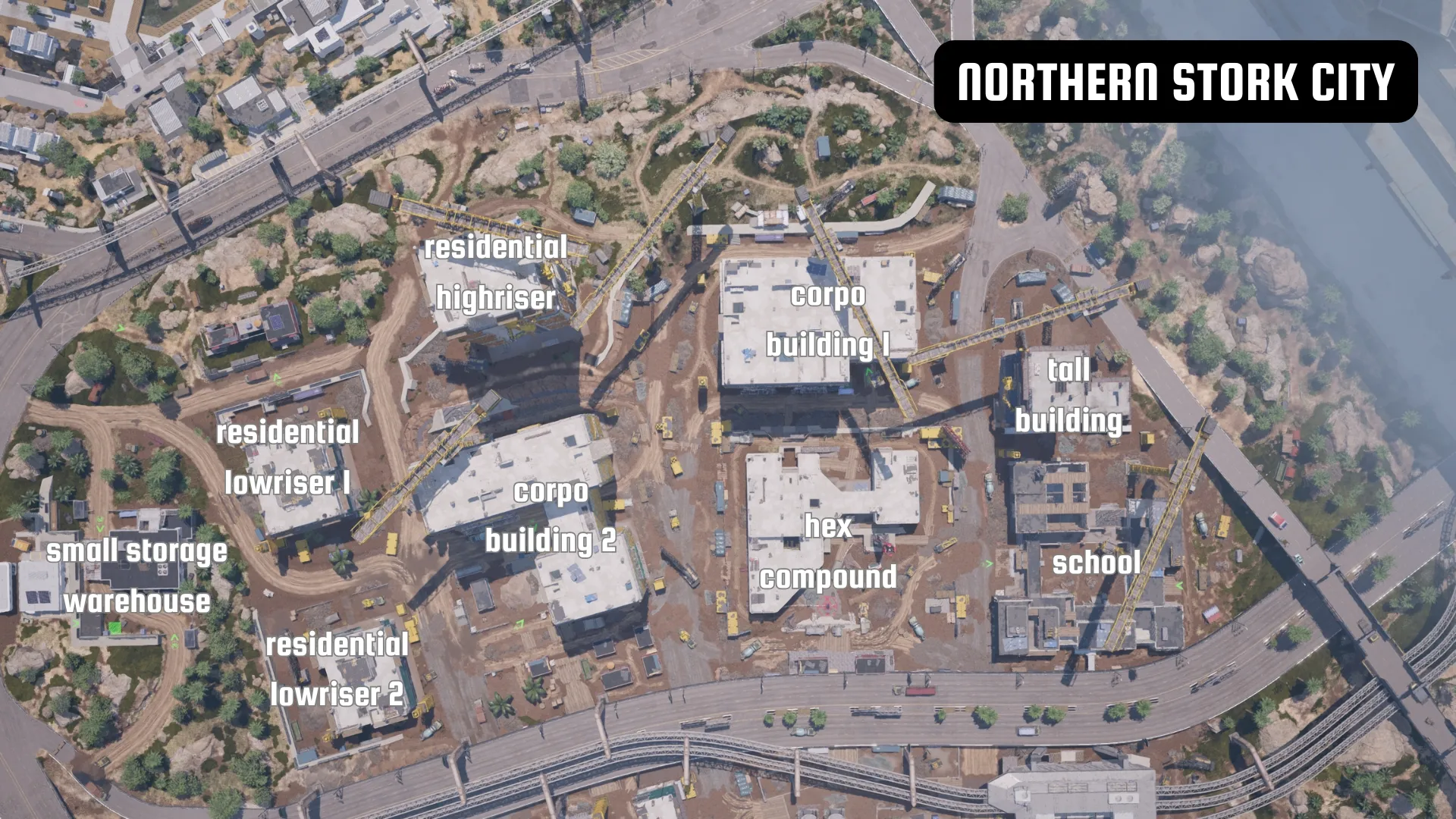
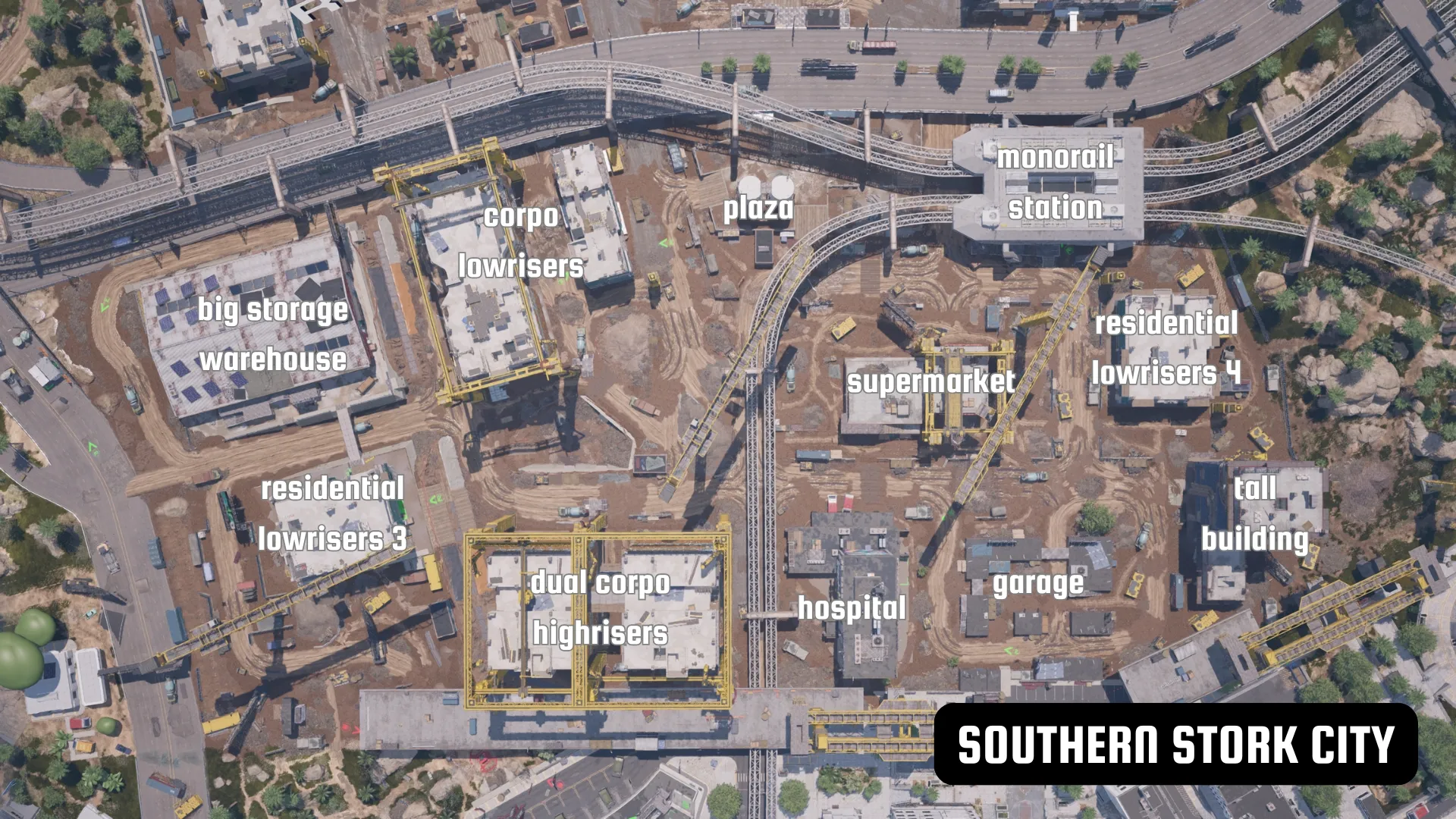
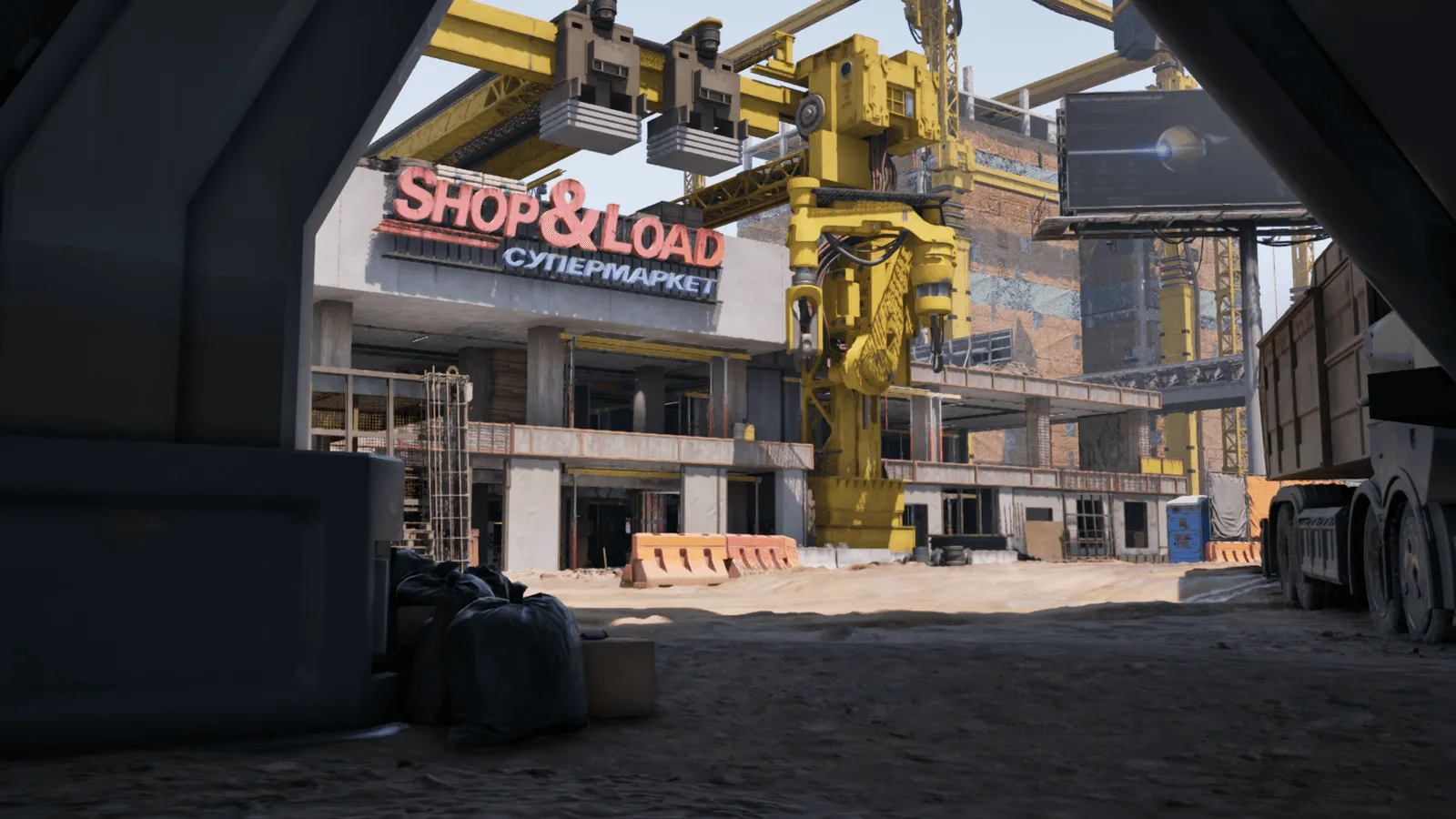
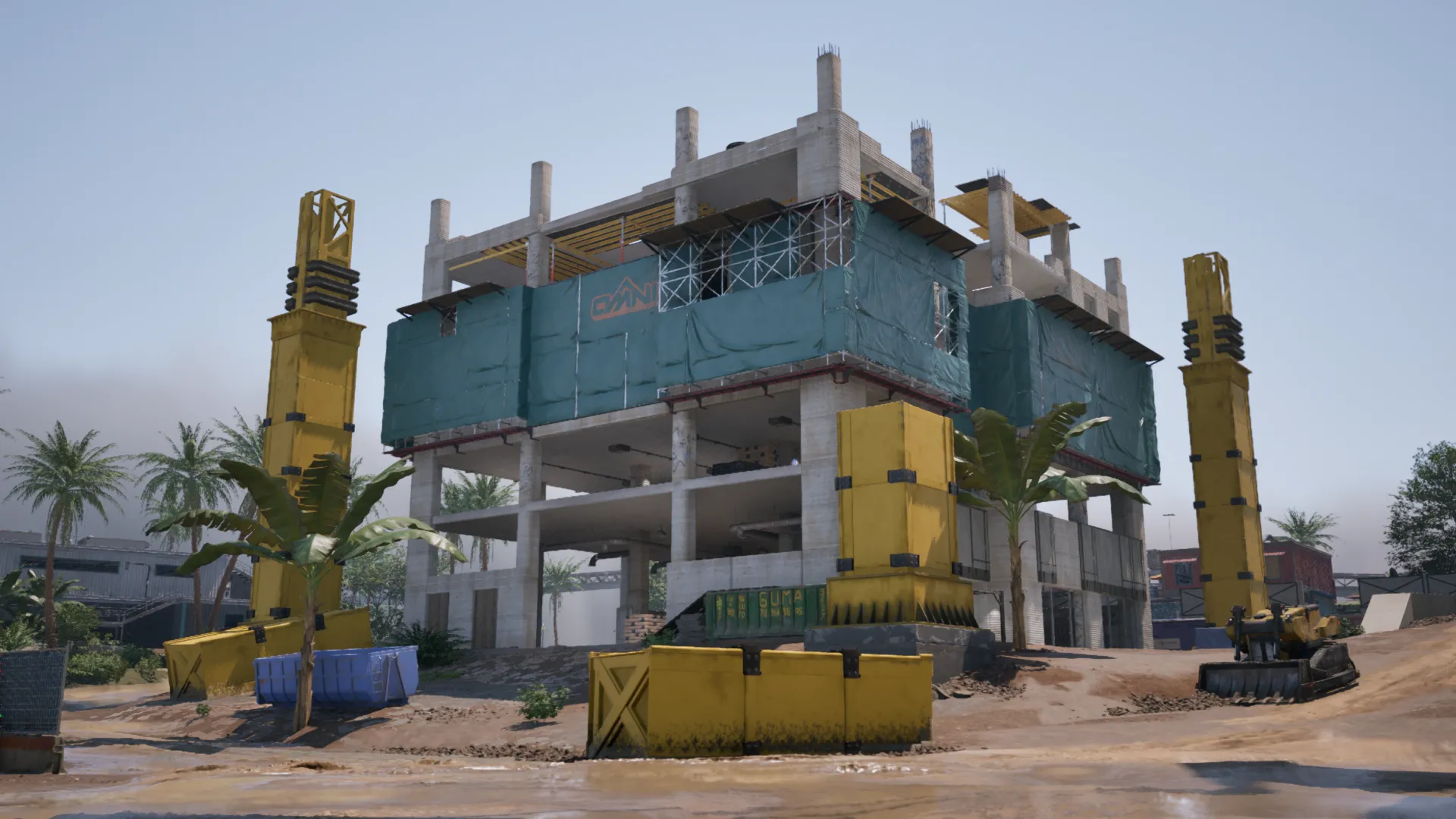
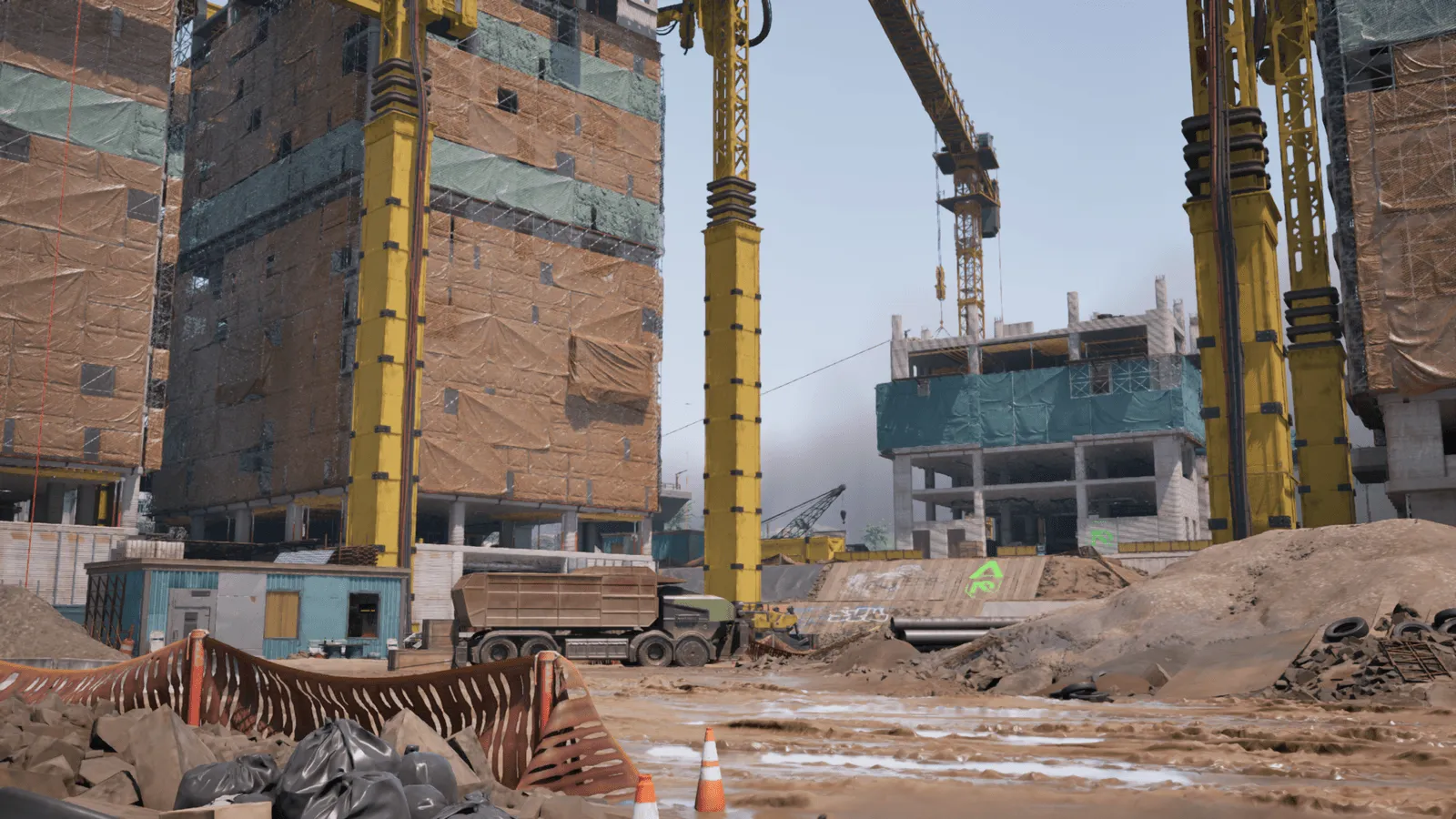
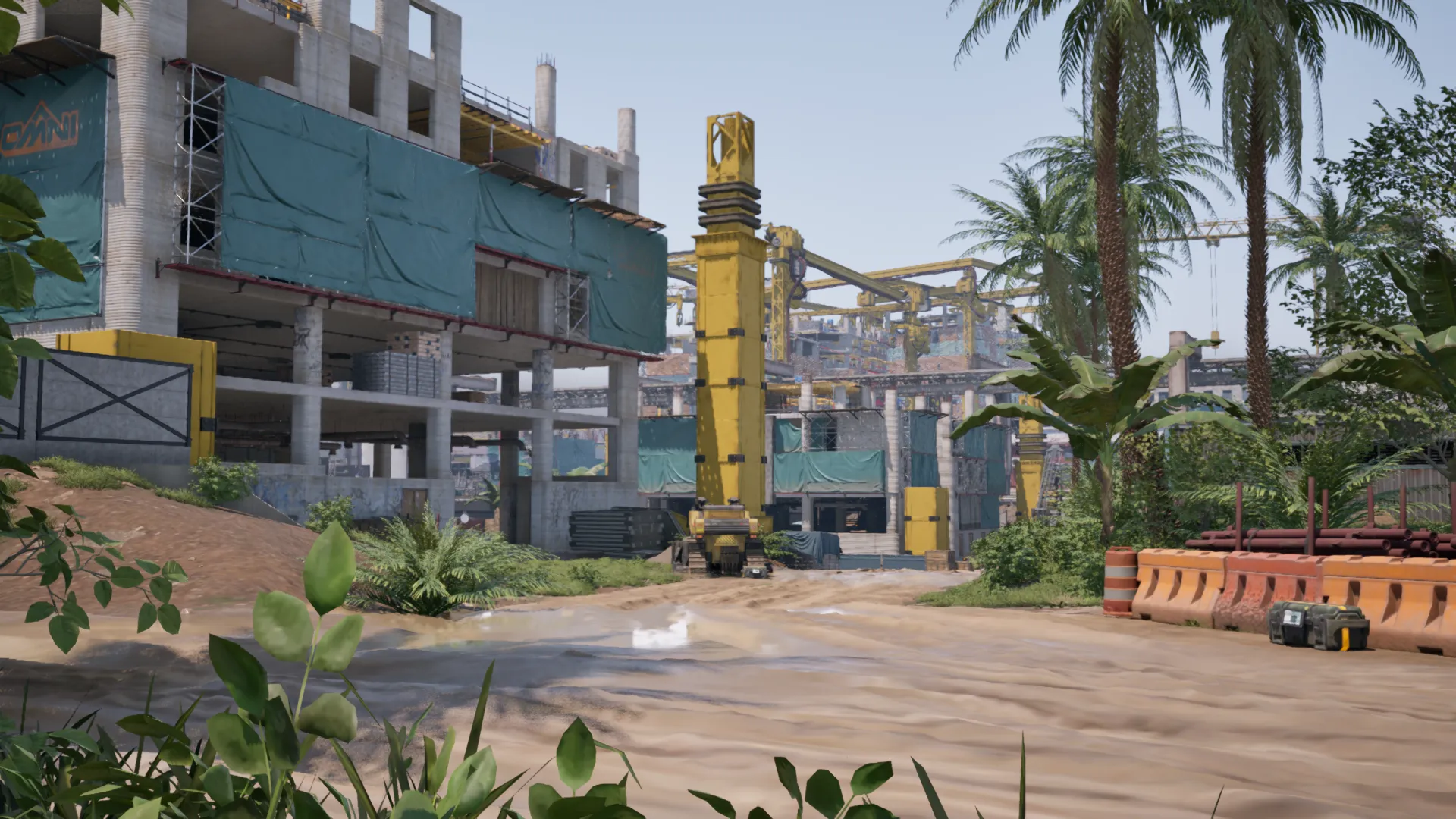
• Improve location recognition through visual differentiation
• Enable intuitive navigation, even for first-time players
• Support mental mapping using real-world architectural logic
• Enable clear and consistent team communication (callouts)
• Ensure consistency in how players move and understand the environment
Overall I want to make sure players understand the uniqueness of the location, experiment with cyber limbs to see all the potential within, each match has a fun aspect to it. We achieve this through "level flow"
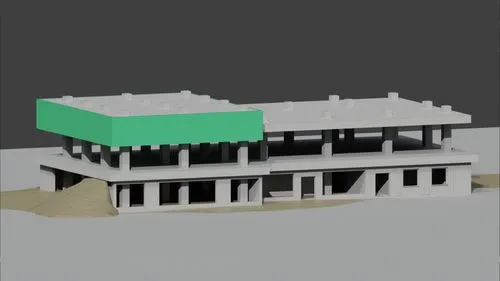
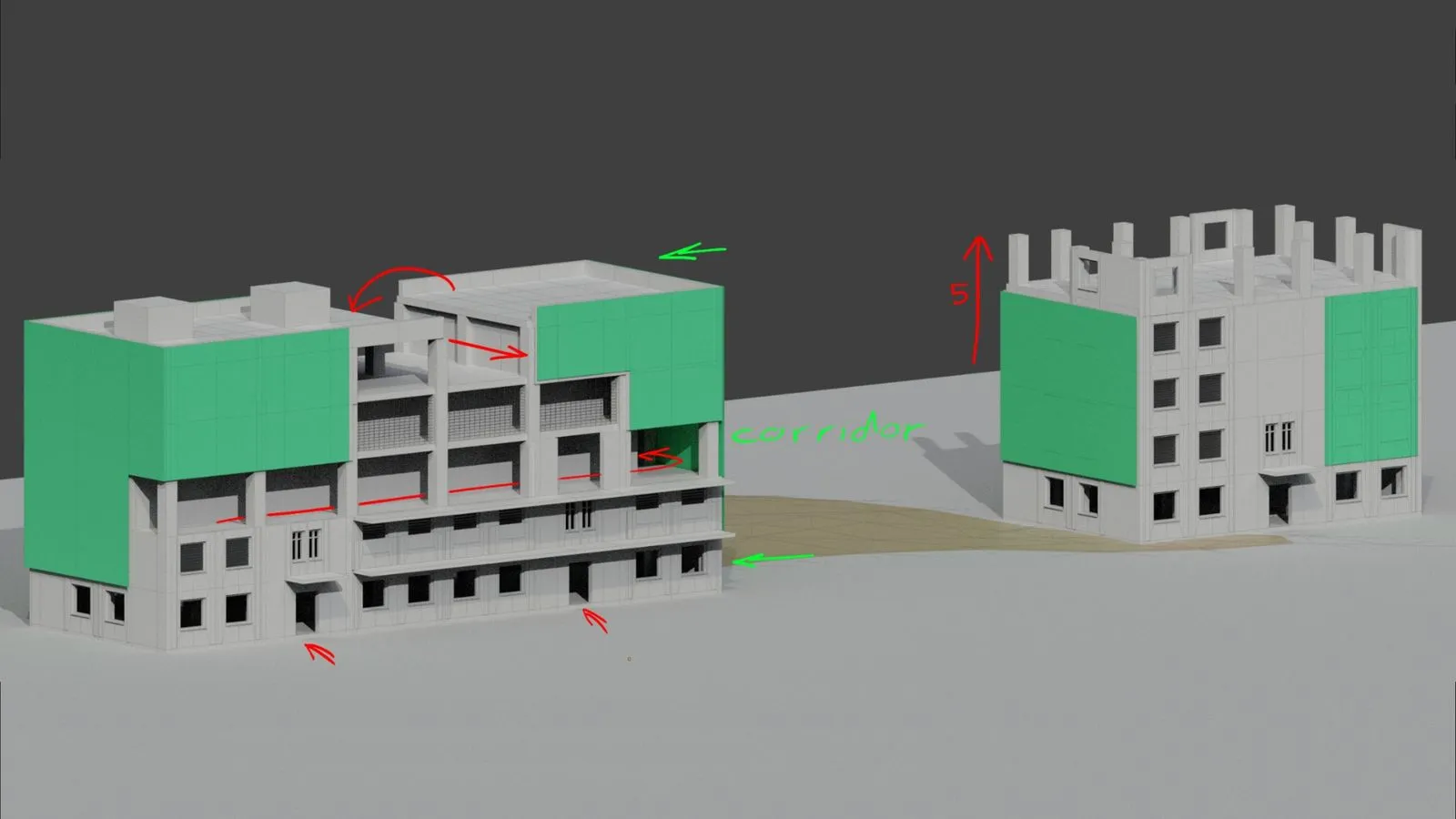
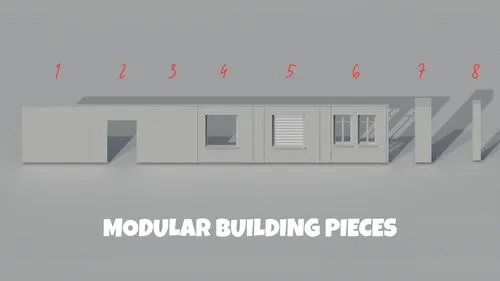
I led and contributed to iterative design sprints with a cross-functional team to explore, test, and refine gameplay and spatial design. Sprint duration varied depending on complexity, ranging from one week to multiple weeks.
• Defined key questions around layout, density, and gameplay scenarios
• Built rapid prototypes using low-fidelity blockouts
• Conducted playtests to observe player behavior and identify issues
• Iterated on layouts based on feedback and findings
This approach allowed us to continuously improve navigation, flow, and gameplay clarity based on real player behavior.
🎮 Gameplay Design Considerations
• Designed spaces to support multiple playstyles (close-range, long-range, mobility-based)
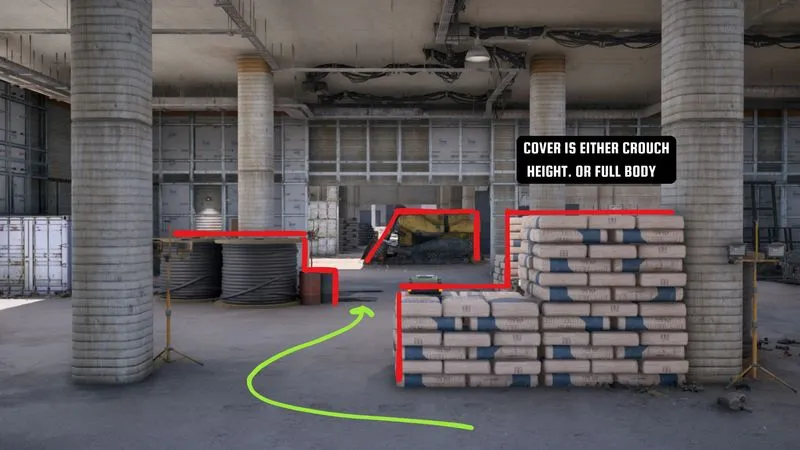
• Balanced cover, sightlines, and verticality to create meaningful combat scenarios
• Considered player abilities (cyberlimbs) and how they influence traversal and engagement
• Designed flow to encourage continuous movement, reducing static gameplay and camping
• Used environmental design to subtly influence player behavior and decision-making
🛞 Design through iteration and playtests
Designing player flow requires anticipating how different playstyles move through the environment. While we can’t control individual players, we can influence decision-making by clearly communicating what type of space they are in and which strategies are viable.
In a battle royale, players are naturally funneled by systems like the shrinking circle or objectives. Level design reinforces this through funneling, contrast, and distribution of loot, cover, and verticality.
Different playstyles respond differently:
• Close-range players favor cover and avoid open spaces
• Long-range players seek clear sightlines
In Off the Grid, cyberlimbs add an additional layer, allowing players to break traditional play patterns—for example, enabling aggressive movement across open areas or controlling space through traps. To maintain engagement, levels are designed to support continuous, circular flow, avoiding dead ends and long idle moments. Standing still should feel risky, encouraging constant movement and decision-making.
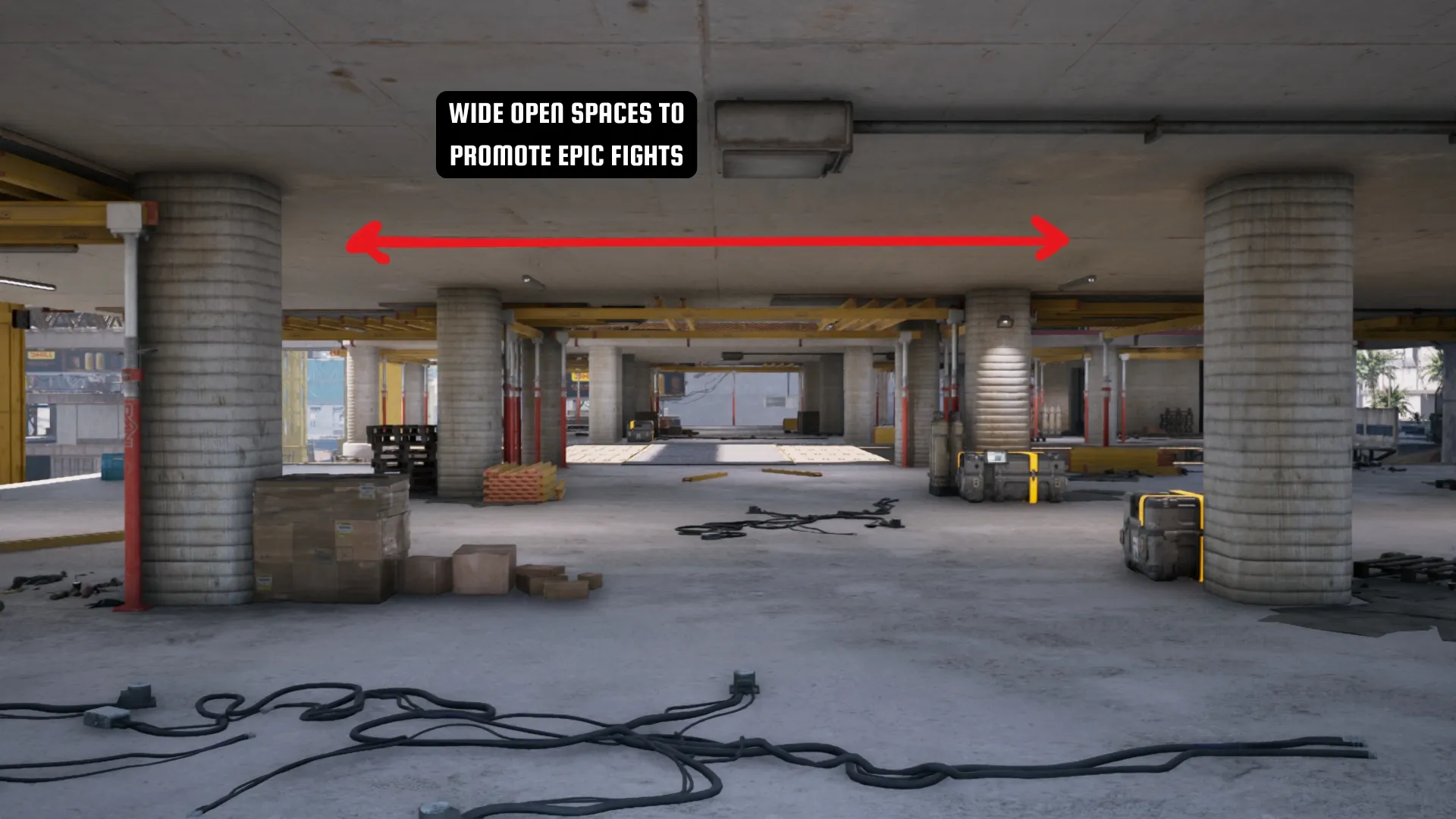
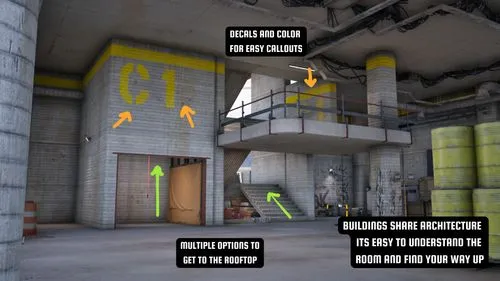
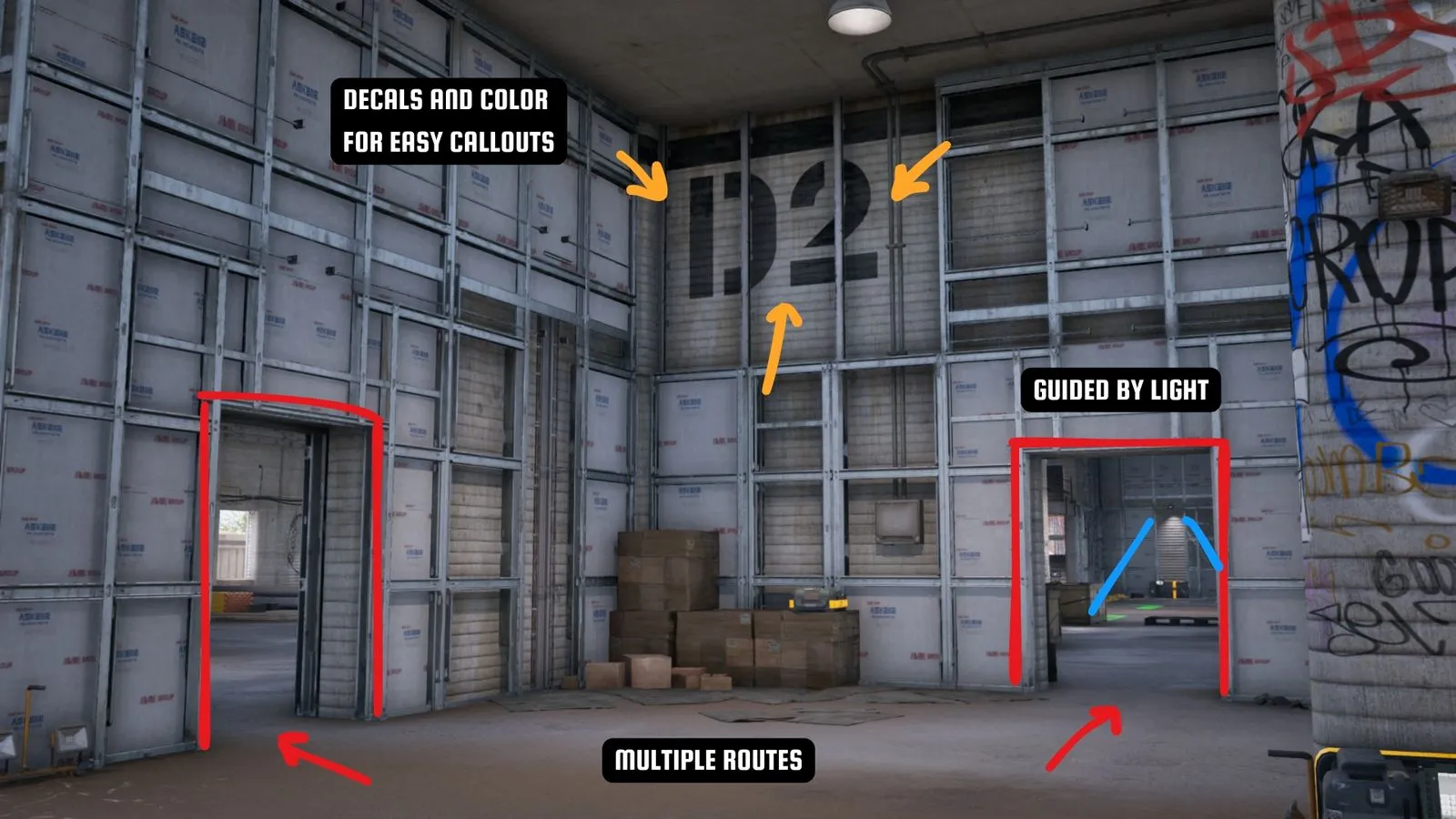
To improve navigation, orientation, and communication, I introduced a set of environmental design strategies focused on readability, predictability, and player flow. The keyword I like to use is "Contrast".
• Used color accents, signage, and floor numbering to make locations easier to recognize → We chose color & shape, as it remains readable even in fast-paced movement and peripheral vision
• Introduced distinct landmarks and building shapes to support orientation and callouts
• Designed layouts using real-world logic to improve predictability and mental mapping
• Simplified vertical navigation by limiting accessible floors and clarifying where players can be → We reduced vertical complexity to help players quickly reason about where enemies could be
• Placed visible and consistent access points (stairs + ziplines) with multiple routes to avoid camping
• Improved engagement flow by avoiding long sightlines and designing curved paths, corners, and elevation changes, keeping players continuously engaged through movement and decision-making → We intentionally broke long sightlines to balance out different playstyles & keep players actively engaged, rather than passively traversing space.
These changes made the environment more readable, navigable, and engaging, while supporting both individual play and team coordination.
• Players began creating their own callouts and naming systems based on landmarks and visual cues
• Improved navigation and orientation, even in dense urban environments
• Enabled clearer team communication and coordination in multiplayer scenarios
• Recognized by players as one of the most engaging locations in the game
💡 Key Takeaway
Designing for recognition and predictability enables players to build strong mental models, improving both navigation and communication.
Taking ownership of the location and working closely with a small team of designers and artists helped us stay aligned and make decisions quickly. This led to a location with a strong identity, something players even compared to Fortnite’s Tilted Towers. Regular playtesting was key. By playing the level ourselves, we could immediately spot issues and fix them early, which helped us move fast while maintaining quality.