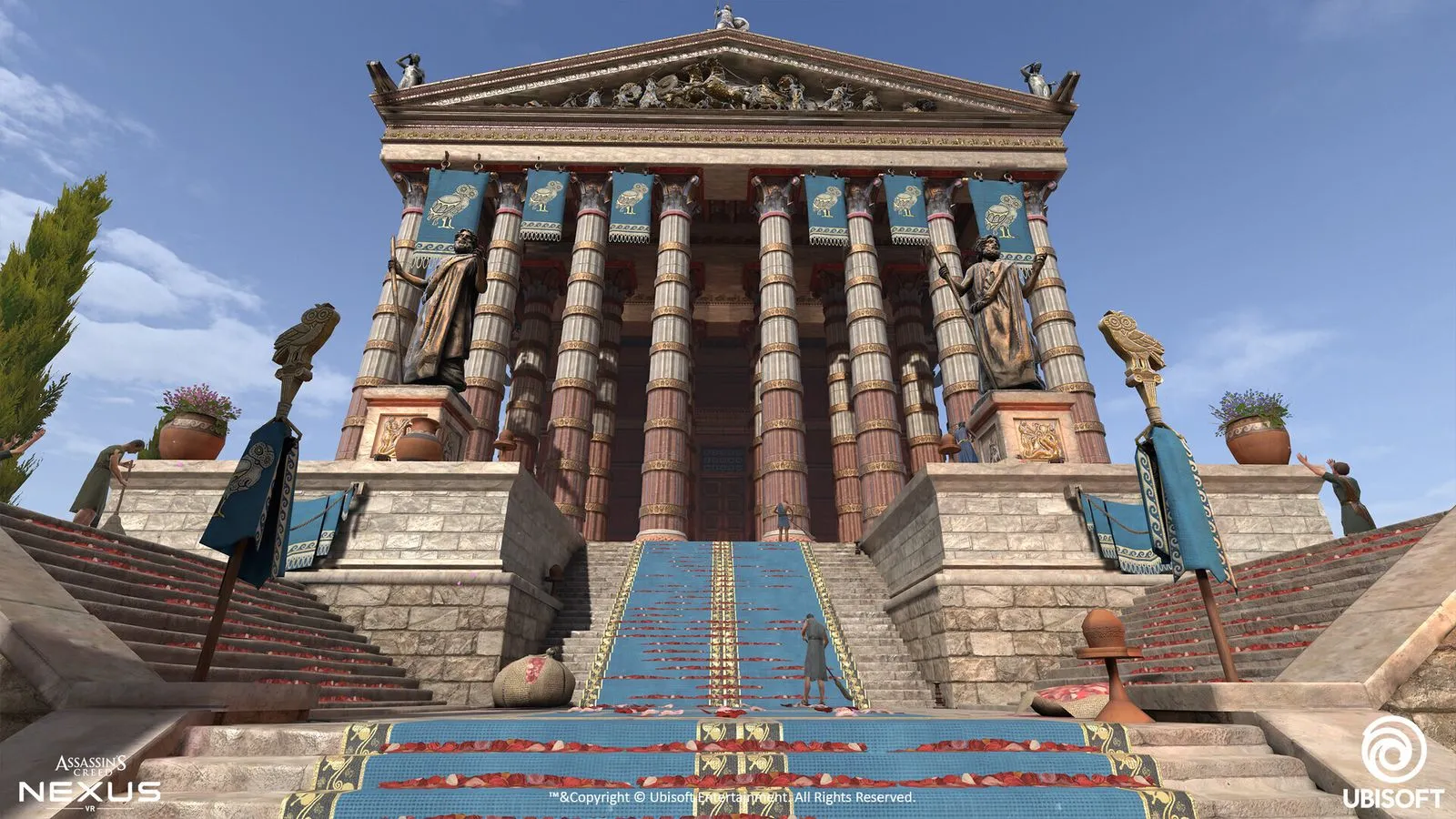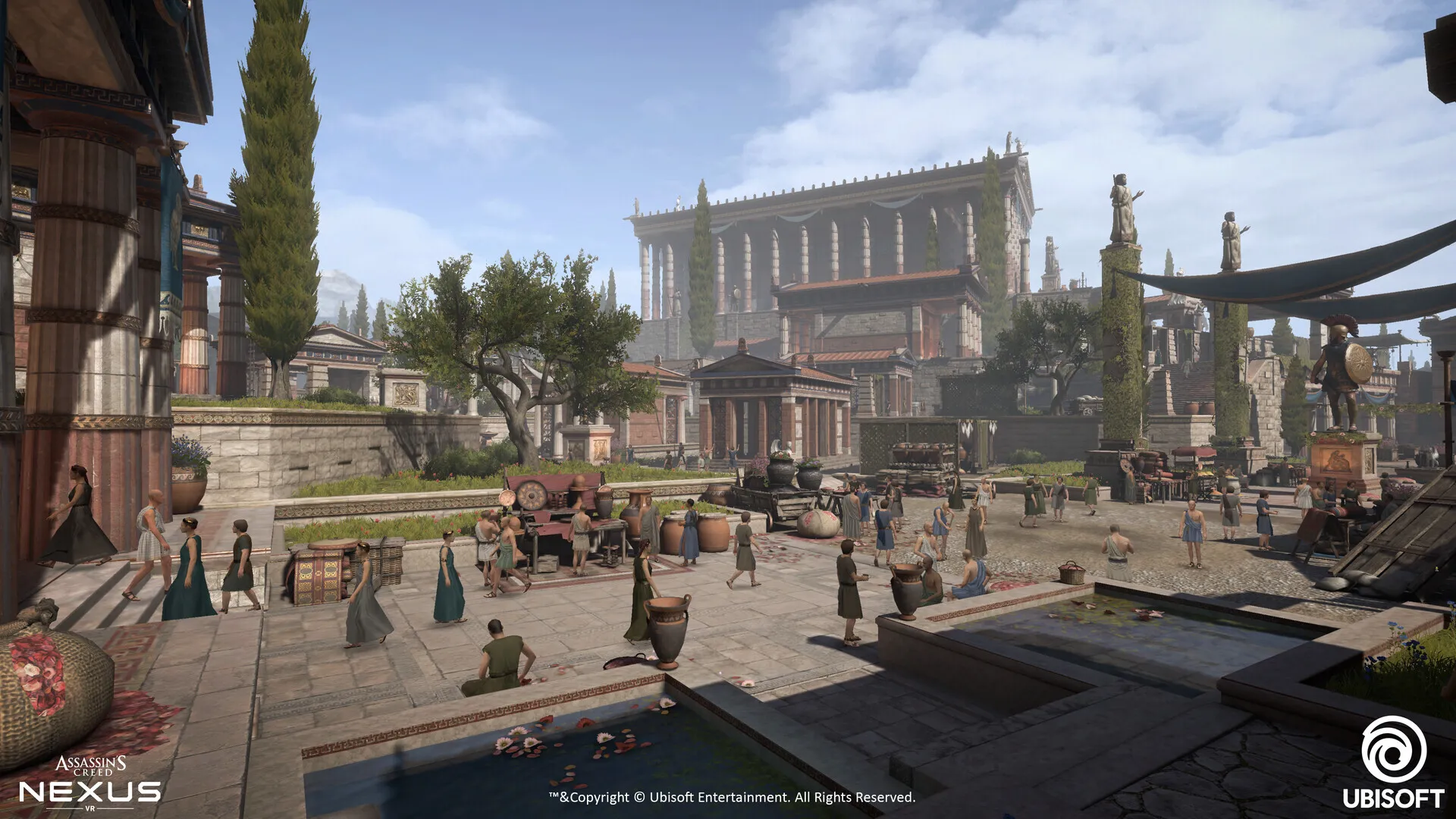
Assassin's Creed Nexus VR is available on the Oculus Store
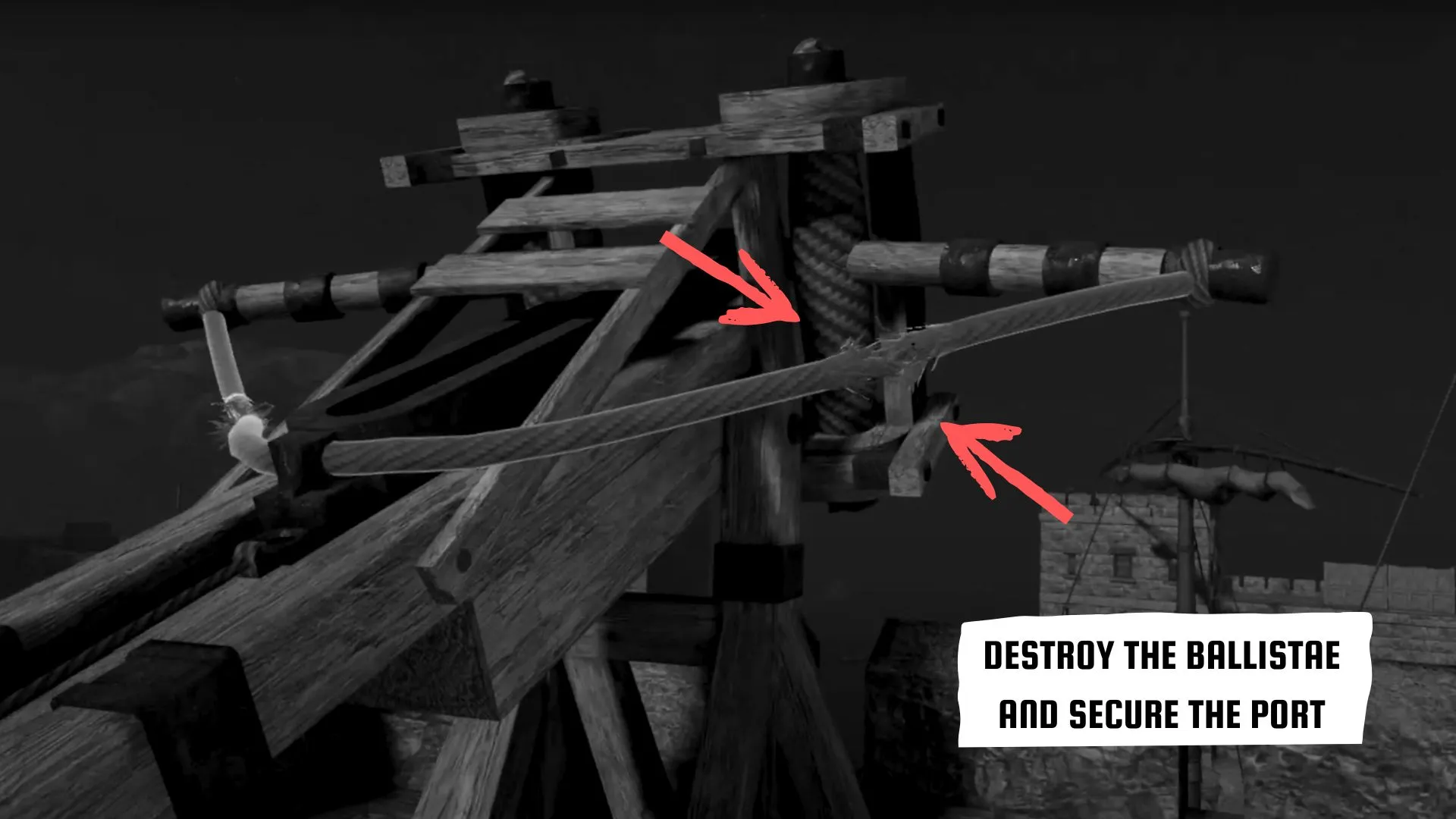
I had the opportunity to be a level designer on 2 Greece missions. Hunting the bow & Battle of Munychia
GENRE: ADVENTURE
DEVELOPER: UBISOFT
ROLE: INTERMEDIATE LEVEL DESIGNER
[CREDITS]
Trinh Nguyen (Level Designer)
Adam Shell (Lead Level Designer)
James Walton (Senior Level Designer)
Thibault Leblan (Level Designer)
Dhruva Modak (Level Designer)
Lewis Bowie (Senior Tech Designer)
Gareth Johns (Lead Artist)
Vincent Joyal (Senior Artist)
Oscar Nacher Garcia (Senior Artist)
Gareth O'Neill (Senior Artist)
Kevin Mckenna (Senior Artist)
Harley Wilson (Lighting Artist)
Tom Knights (Narrative)
⬆️ some people I worked close together with ⬆️
In Assassin’s Creed VR, I designed levels to improve fairness, spatial awareness, and player guidance in a VR environment.
By addressing issues caused by real-world player height and balancing freedom with structured guidance, players were able to navigate, plan, and execute actions with confidence in a semi-open sandbox experience.
On Assassin’s Creed VR, I worked as a Level Designer with ownership over two Greece-themed levels: Hunting the Bow and Battle of Munychia.
• Designed levels from blockout to final implementation, including stealth, combat, parkour, and puzzle scenarios
• Implemented mission logic and flow through visual scripting
• Set up AI behavior, VFX, voice overs, and cinematic sequences
• Prototyped new puzzle ideas and presented them to stakeholders
• Mentored a junior designer and collaborated with cross-functional teams and co-dev studios
I worked on Hunting the Bow and Battle of Munychia. Gameplay credits to the players
One of my proudest works, creating 1 event, 1 playground for all sports
One of the Redbull sponsored events. Simple and fun.
One of my proudest works, creating 1 event, 1 playground for all sports
One of the Redbull sponsored events. Simple and fun.
Designing for VR introduced unique challenges in player perception, fairness, and navigation.
🧍 Inconsistent Player Experience (VR Constraint)
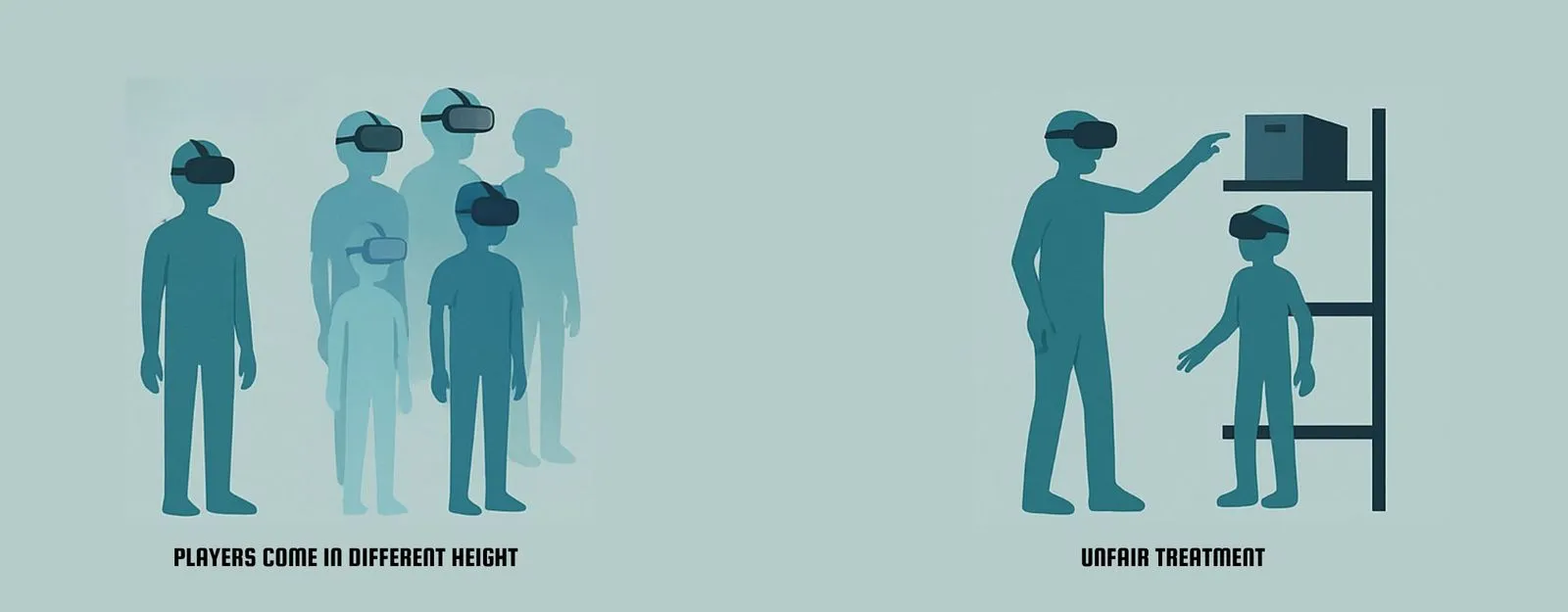
In VR, players’ real-world height directly affects gameplay (unless addressed):
• Taller players could see or shoot over cover
• Shorter players could gain unintended stealth advantages
This made it difficult to ensure a fair and consistent experience across players.
🧭 Navigation & Guidance in Sandbox Environments
The levels followed a semi-open sandbox structure, allowing players to approach objectives in multiple ways, however:
• Too much openness could lead to players losing direction
• Too little guidance could create confusion
Balancing freedom and clarity was a key challenge.
🧩 Decision-Making & Clarity
The experience relies on players:
• Observing AI behavior
• Gathering information
• Planning their own approach
Without clear cues, players could struggle to:
• Identify viable paths
• Make confident decisions
💥 Core Challenge
How might we design a VR sandbox experience that ensures consistency across players, while guiding them through the environment without limiting their freedom of choice?
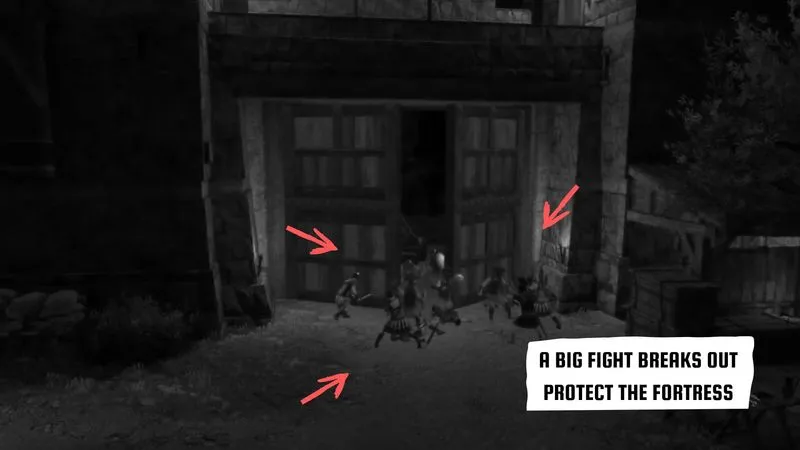
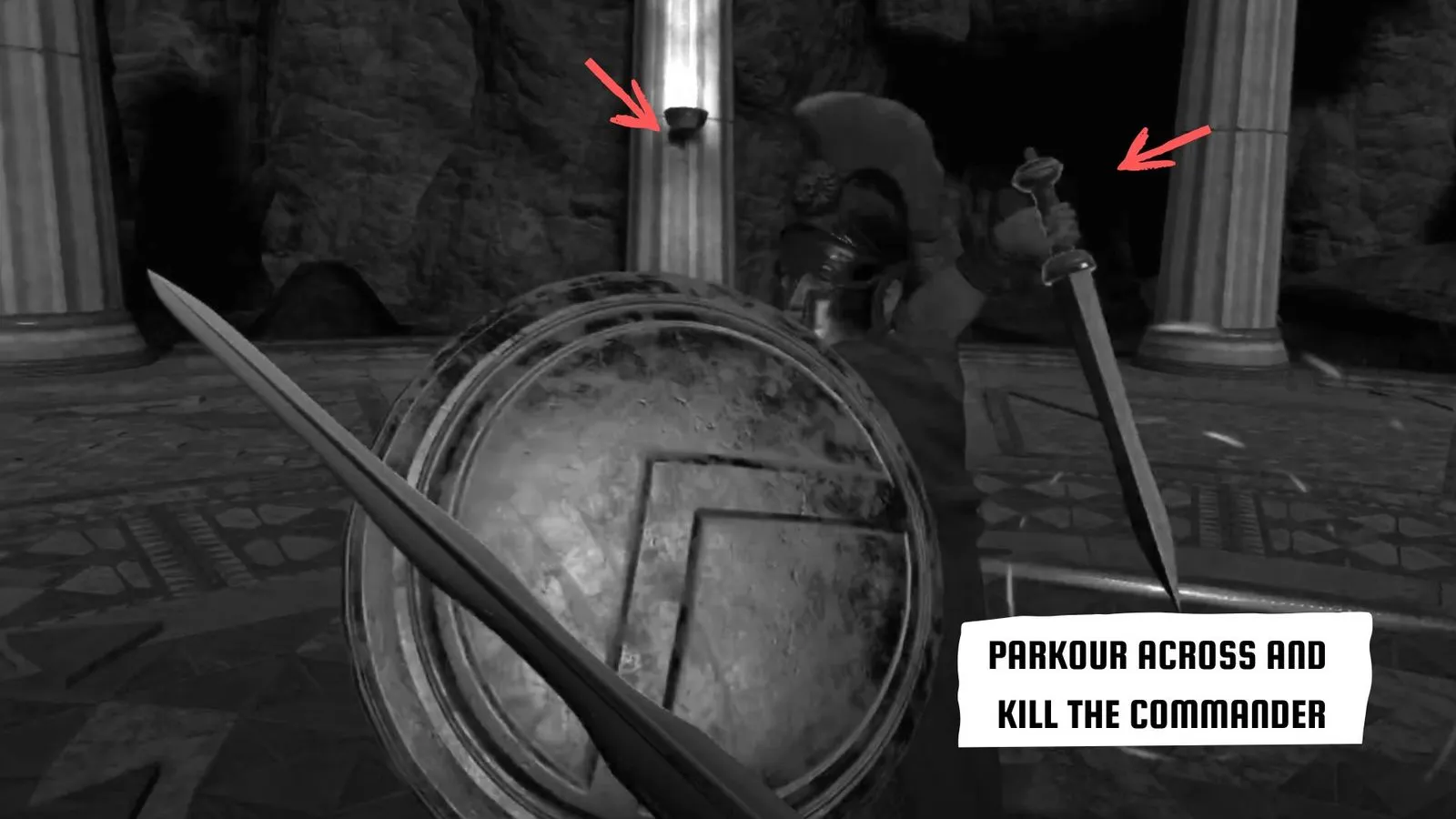
• Ensure a consistent and fair gameplay experience regardless of player height
• Guide players through semi-open environments without restricting freedom
• Support clear decision-making in stealth and combat scenarios
• Maintain immersion and the fantasy of being a skilled assassin
I worked in an iterative design process, collaborating with designers, artists, and stakeholders to prototype, test, and refine gameplay scenarios.
• Designed and tested sandbox gameplay “bubbles” with clear objectives
• Prototyped stealth, puzzle, and combat scenarios and gathered feedback
• Conducted playtests to observe player behavior and refine level flow
• Iterated on layout, AI placement, and interaction cues to improve clarity and usability
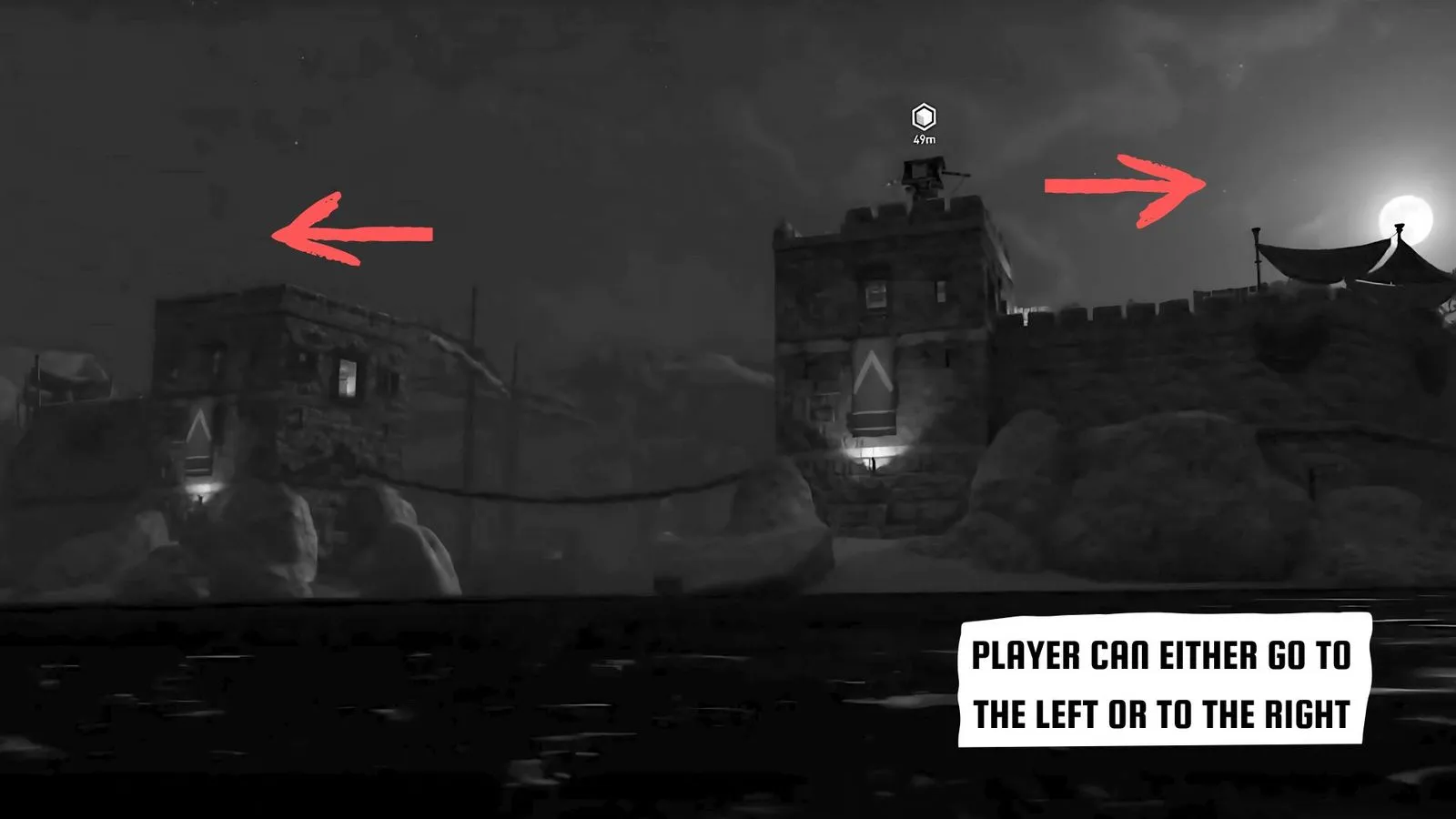
▶️ The levels inside of Assassin's Creed VR are semi-open world with sandbox elements.
Like most other Assassin's Creed game, ACVR includes 360 exploration and sandbox elements. Confined in the mission space, I call them gameplay bubbles. Within these bubbles there is a main objective, secondary side-objectives and even hidden objects the player can collect like the "Assassin's Coins".
Players can always come back and replay the mission, find new ways to approach the mission and do the additional content that they haven't done yet. In this sense its replay value is quite similar to games like for example "HITMAN 3" by IOI.
When placing gameplay elements, it should be consistent across the level, to make sure there is "affordance" which allows players to understand and recognize patterns and behaviors. Examples are for example: placement of AI, parkour starters, stealth assets, throwable and breakable assets.
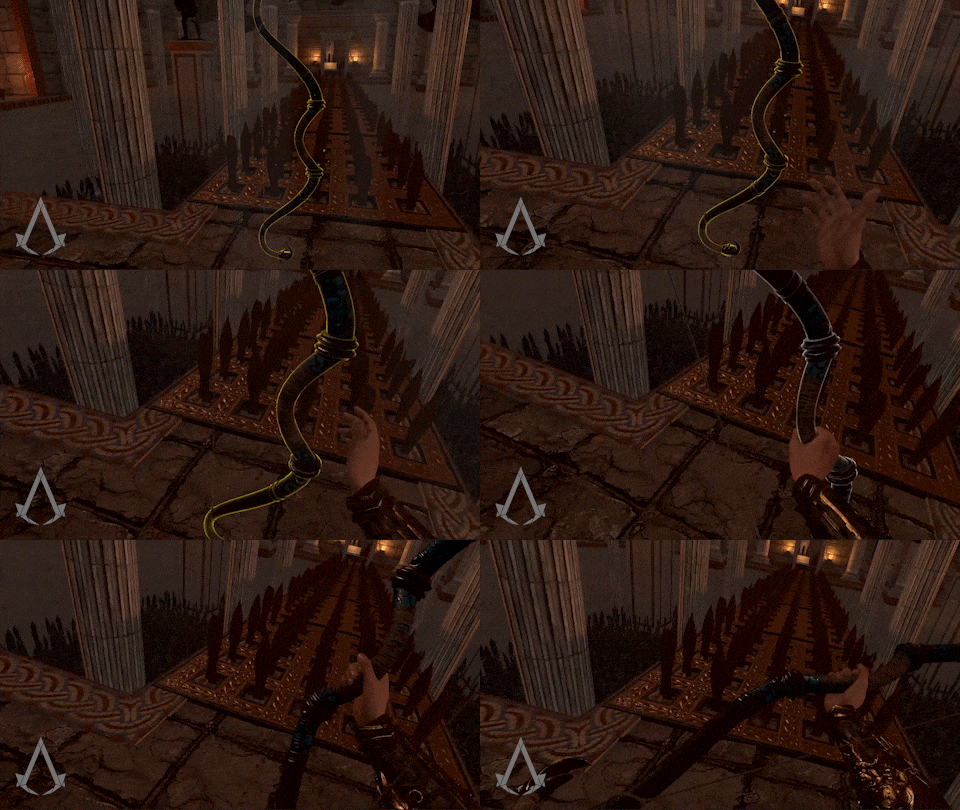
▶️ The puzzles in Hunting the bow, are about collecting objects and time trials. For this we mainly used Boolean statements in the mission script.
Visual cues like object highlighting through the scout functionality and sound cues through eavesdropping guards were used to aid the players.
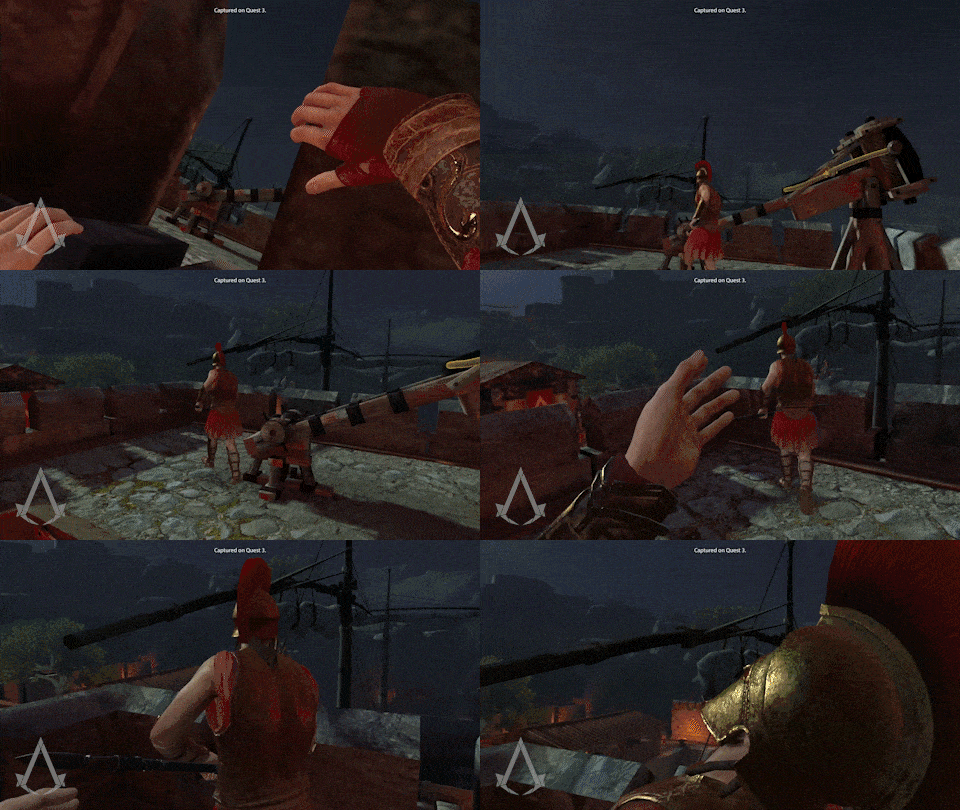
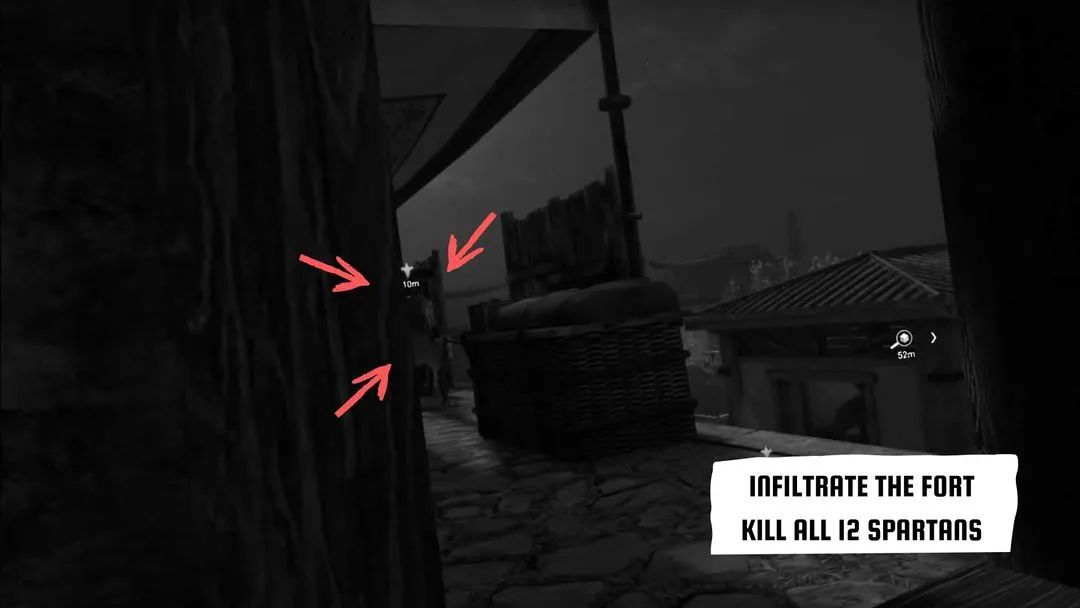
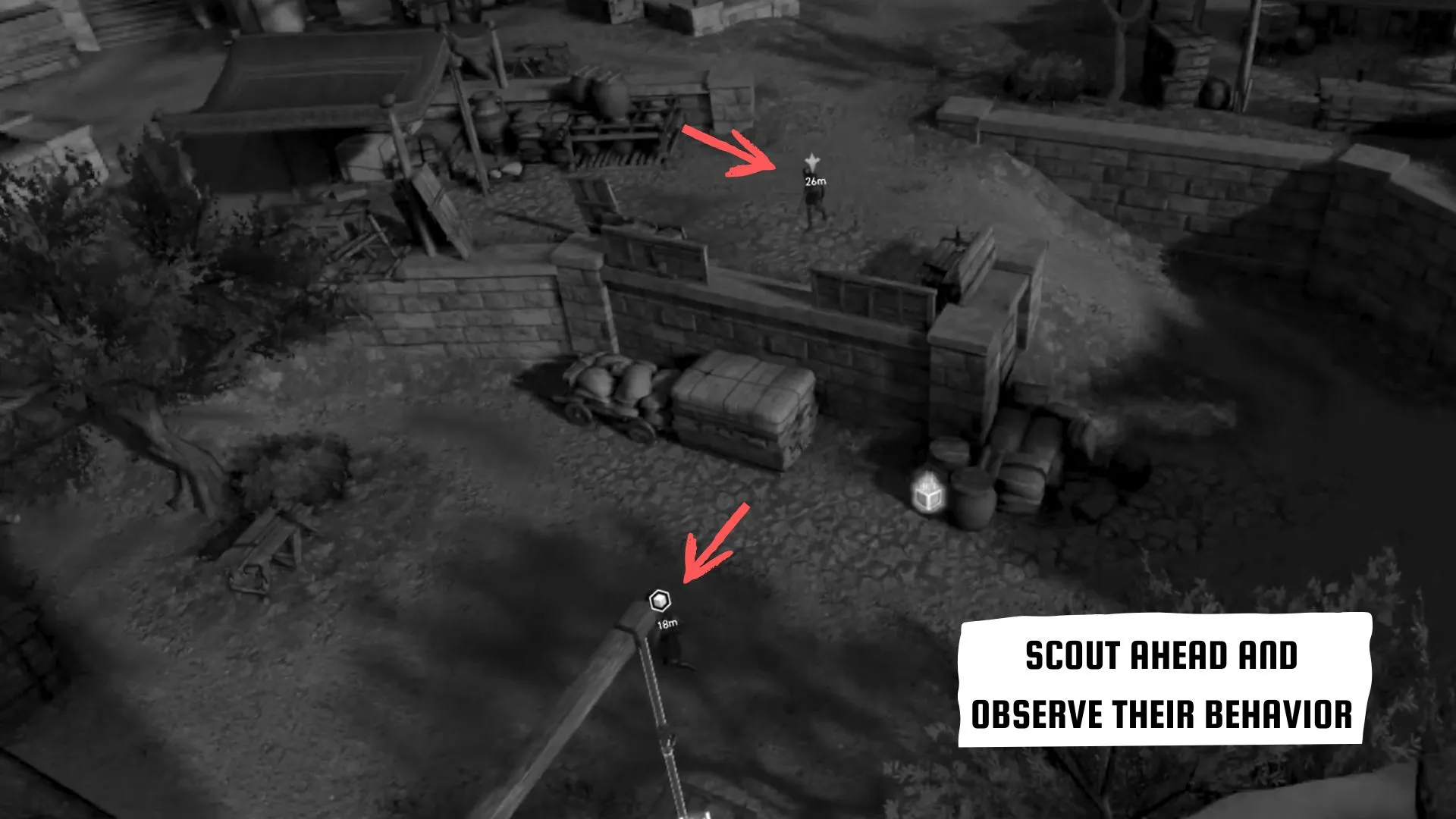
▶️ When placing AI, it is important that players can observe the AI's behavior from a safe spot.
The AI in the game can either guard or patrol and have different enemy archetypes. By scouting ahead from a vantage point, players can tag enemies, familiarize themselves with the AI's behavior patterns and make tactical decisions.
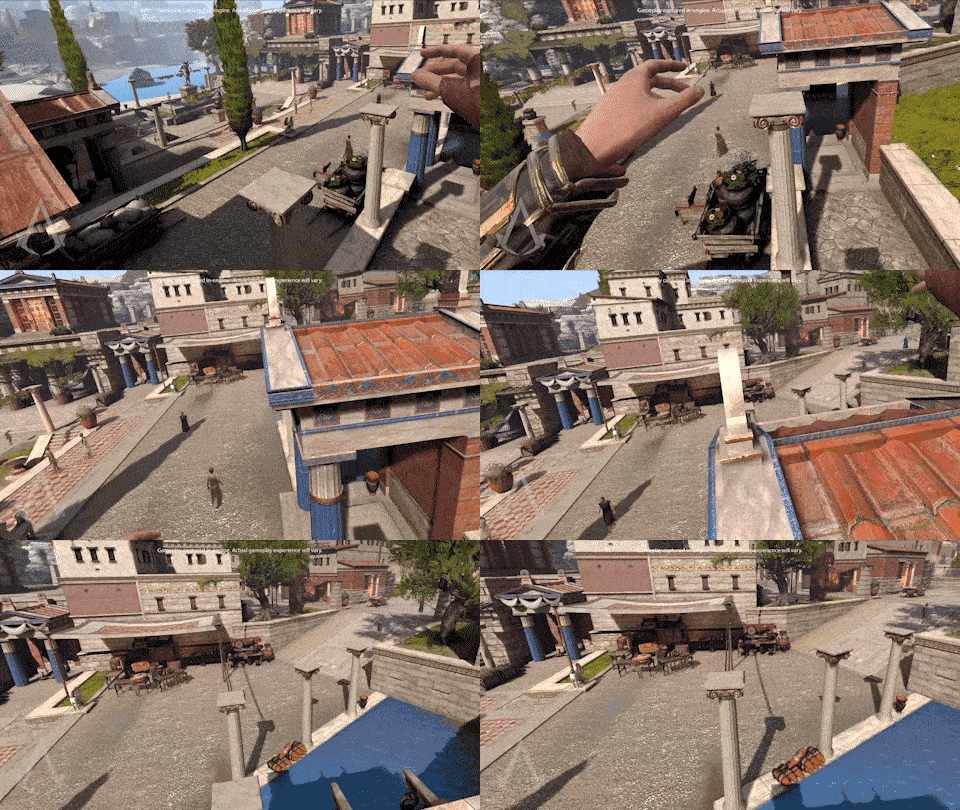
▶️ Parkouring is one of the main mechanics in the game, while polishing the level, I made sure that the level would flow nicely with minimum dead ends.
Parkouring shouldn't feel difficult and feel more like a fun way to traverse through the map. Promoting player exploration and allow the player to perhaps even find hidden secrets.
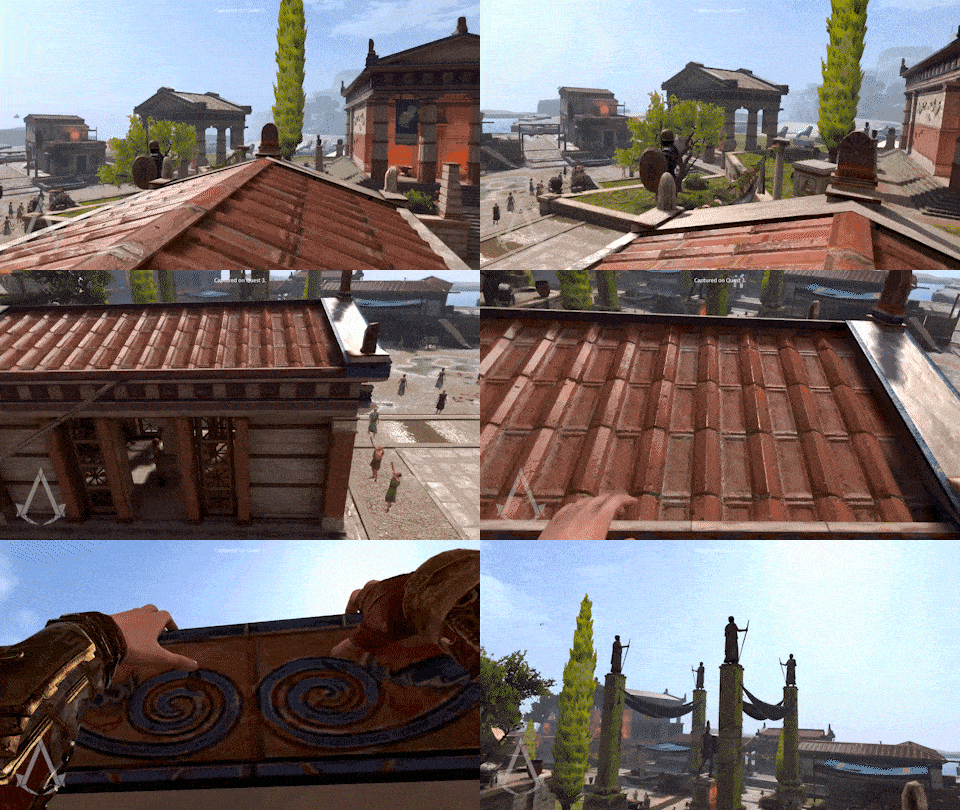
▶️ To confirm that players could parkour across objects from A to B, we used a tool that could calculate if the jump was possible.
Parkour starters were used to show players ideal starting points to start their parkour. These are objects, similar to a ramp, that players could use to easily jump from the ground floor to higher elevated areas.
To balance freedom, clarity, and fairness, I designed the experience around guided sandbox principles, combining player choice with structured cues.
🧍 Consistent Player Embodiment
• Implemented player height calibration to ensure a consistent gameplay experience
• Prevented unintended advantages based on real-world physical differences
→ This ensured fairness and allowed designers to better control gameplay interactions
→ During testing, I noticed that level setups behaved differently depending on the designer’s physical height.
While a level felt correct for one designer, it could create unintended advantages or disadvantages for others.
I raised this issue with the team, which led to aligning on a consistent player height to ensure fairness across players.
🧭 Guided Sandbox Design
• Designed levels as semi-open environments with multiple valid approaches
• Avoided fully open layouts to prevent players from losing direction
→ We intentionally limited openness to improve clarity, while preserving player freedom
🌄 Controlled Scale & World Illusion
• Used vista landmarks to create the illusion of a larger world
• Contained gameplay within structured areas (“gameplay bubbles”)
→ This allowed players to feel a sense of scale without sacrificing navigation clarity
🧩 Player-Driven Problem Solving
• Designed encounters as puzzle-like scenarios with multiple solutions
• Supported different playstyles through layout, AI behavior, and environment design
→ Players could observe, plan, and execute their own approach, increasing engagement and replayability
🧠 Clear Affordances & Readability
• Used placement of cover, objects, and AI to signal possible actions
• Ensured players could scout safely and gather information before committing
→ Reduced hesitation and improved decision-making confidence
• Players explored more actively due to strategic placement of objectives and collectibles
• Hidden collectibles (Assassin’s Coins) encouraged players to search for secret areas and alternative paths
• The sandbox structure enabled players to approach objectives in multiple ways, increasing replayability
• Clear guidance combined with freedom allowed players to plan and execute strategies with confidence
💡 Key Takeaway
Balancing freedom with guidance enables players to explore, experiment, and develop their own strategies, while still maintaining clarity and direction.
Designing for VR introduces unique challenges, as players’ real-world height directly affects gameplay.
Differences in height can create unintended advantages, such as seeing over cover or gaining stealth benefits.
Of course one can argue that it is part of the design decision to delibrately have player real height impact the gameplay. But for ACVR, to ensure a consistent and fair experience, we aligned on a standardized player height by calibrating the camera at the start of the game.